Decking for Roofs: Uses, Materials, and Structural Considerations
Is your roof deck more than a hidden platform? Absolutely. It’s the backbone between your living space and the world above. Whether you’re managing a busy downtown business or looking after your family home, the right decking can mean the difference between years of comfort and a costly surprise.
At Robert Foley Roofing, we see roof decks as more than just structural elements—they’re the unsung heroes of every safe, dry, and comfortable property. Let’s peel back the layers and talk about what really matters when it comes to decking for roofs.
What is Roof Decking?
Think of roof decking as the canvas beneath the paint. It’s the flat surface that sits on top of your rafters, supporting all the layers above—underlayment, shingles, or membranes. Without solid decking, your roof is like a tent with a sagging floor.
Roof decking isn’t just for new builds. It’s a critical player in repairs, replacements, and upgrades. For commercial properties with flat roofs, decking can also double as a usable space—think rooftop lounges or green roofs. In residential settings, it’s the unsung layer that keeps leaks, pests, and drafts at bay.
Common Decking Materials 🪵
Materials matter. The type of decking you choose shapes both the performance and the price.
- Plywood: The classic choice. Plywood is strong, affordable, and widely used for sloped and shingle roofs.
- Oriented Strand Board (OSB): Like plywood’s practical cousin, OSB is made from wood chips and adhesives. It’s budget-friendly and popular for both homes and businesses.
- Concrete: Heavy-duty and built to last, concrete decking is common on commercial flat roofs. It supports heavy loads and resists fire.
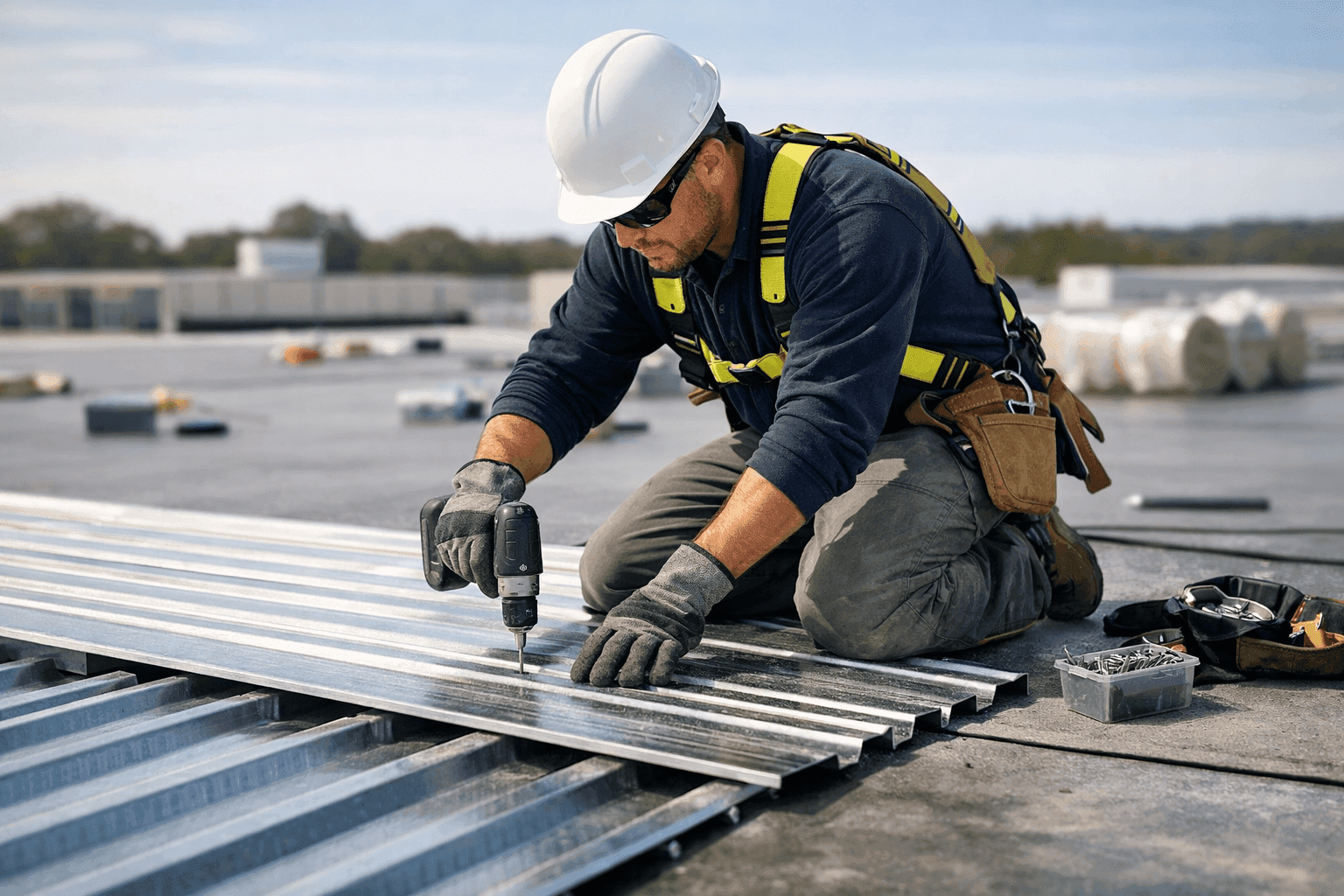
- Metal Decking: Steel or aluminum panels are lightweight and durable, often used in commercial applications where strength and fire resistance are key.
- Wood Planks: Traditional and beautiful, but mostly used in historic buildings or specialty projects now.
- Composite Materials: Blending wood fibers and plastics, composites offer weather resistance and longevity for specialty uses.
Each material comes with its own pros and cons. Plywood and OSB are standard for most residential roofing, while concrete and metal step up for larger, flatter, or high-traffic roofs. The right choice depends on your roof’s pitch, your budget, and how you plan to use the space.
Structural and Safety Requirements
A roof deck is only as good as its bones. Structural integrity isn’t just about holding shingles—it’s about making sure your roof can handle storms, snow, and even the weight of a rooftop gathering.
Load-bearing capacity is the first thing the pros look at. Building codes (like the International Building Code, or IBC) set minimum requirements for how much weight a roof deck must support. This includes the weight of roofing materials, expected snow, and any extra features—like solar panels or rooftop HVAC units.
Fasteners and spacing are just as important. Decking panels must be attached firmly, with no gaps that could let in moisture or cause sagging. For commercial roofs, fire ratings and wind uplift standards add another layer of safety.
If you suspect your decking has taken a beating—maybe from a leak or a heavy storm—it’s smart to get a structural repair assessment before patching the surface. Safety starts beneath the shingles.
Maintenance for Roof Decks 🧰
Roof decks don’t ask for much, but they do need attention. Like the foundation of a house, they support everything above. A little care goes a long way.
Inspect regularly: Walk your attic or crawlspace a couple of times a year. Look for warped boards, water stains, or sagging spots.
Watch for leaks: Even a tiny drip can rot decking from the inside out. Address leaks fast—don’t let them fester.
Clear debris: On flat or low-slope roofs, leaves and dirt can trap moisture and speed up decay. Keep the surface clean.
Check for pests: Termites and rodents love wood. If you hear tapping or see sawdust, investigate.
If you’re adding features—like skylights, solar panels, or green roofs—have your decking checked for compatibility and strength.
Why Decking Matters for Flat Roofs
Flat roofs are a different animal. They often serve as workspaces, storage, or even lounges. The decking here is thicker, stronger, and more resilient to standing water. If your building has a flat or low-slope roof, double-check that the decking is up for the job. Our flat roof decking solutions are built for both performance and peace of mind.
Signs Your Roof Deck Needs Help
Here are a few red flags that it’s time for a closer look:
- Warped or bouncy surfaces when walking on the roof
- Persistent leaks or unexplained stains on ceilings
- Cracking or splitting sounds in strong wind
- Visible mold, mildew, or sagging sections
- Musty odors from above
Don’t ignore these signs. Early repairs can prevent major costs down the line.
When It’s Time for Structural Repair
Sometimes problems run deeper than the surface. Significant rot, termite damage, or storm impacts may call for more than a patch job. If the decking isn’t sound, any new roofing installed on top is at risk.
A certified inspection will determine if partial or full replacement is needed. This ensures your roof stays safe, sturdy, and up to code.
Can I Add a Usable Roof Deck?
Dreaming of a rooftop patio or green space? It’s possible—but only if your existing structure can handle the weight. Reinforcements may be needed, and waterproofing becomes critical. Codes and safety guidelines must be followed to the letter.
Working with professionals familiar with both decking and structural engineering is the best way to make your vision a reality—without risking your investment.
The Role of Decking in Preventing Leaks
Decking is your roof’s shield against water intrusion. Gaps, cracks, or rot in the decking create paths for leaks, no matter how new your shingles or membrane. This is why every major roofing job starts with a decking inspection.
DIY vs. Professional Help
Replacing a few shingles? Maybe. Replacing decking? That’s a job for skilled hands and the right tools. The risks are too high for shortcuts. Structural missteps can lead to injuries or long-term damage.
If you’re unsure what’s happening under your roof, play it safe. Get a professional assessment and make repairs the right way.
Safety Checklist for Roof Decking Projects 🛠️
- Always confirm load capacity before adding weight
- Use proper fasteners for the decking type
- Wear fall protection and use secure ladders or scaffolding
- Check weather—never expose open decking to rain
- Follow manufacturer and code guidelines for spacing and installation
The Occupational Safety and Health Administration (OSHA) and International Building Code (IBC) are excellent sources for safety and construction requirements.
Decking and Seasonal Changes
Roofs take a beating in every season. Heavy snow, spring rains, and summer heat can stress your decking in different ways. In some areas, freeze-thaw cycles can cause expansion and contraction, opening up gaps that let in water.
If you’re in a region with harsh winters or unpredictable storms, schedule decking inspections before and after peak seasons. For those in the Bozeman area, seasonal changes can be especially tough on roofing systems.
Timeline and Disruption: What to Expect
Decking projects can take anywhere from a day for small repairs to a week or more for full replacements or rooftop deck builds. Expect some noise, dust, and limited access to the affected area. Planning ahead keeps surprises to a minimum.
Common Mistakes to Avoid
- Overlooking hidden damage under old roofing
- Using the wrong materials for roof pitch or climate
- Ignoring load limits for rooftop features
- Skipping professional inspections after leaks or storms
Final Thoughts: The Backbone of Your Roof
A roof is only as strong as what lies beneath. Decking may be out of sight, but it’s never out of mind for those who value reliability, safety, and comfort. If you’re facing roof repairs, replacements, or dreaming of a rooftop retreat, put decking at the top of your checklist.
Call Robert Foley Roofing now — or reach us anytime at 844-684-1881 .