Downspout Installation: Step-by-Step for Effective Drainage
Why Downspout Installation Matters
Imagine a rainstorm pounding your roof. Water streams down shingles and into gutters. But what if your downspouts aren’t up to the task? Water overflows, soil erodes, and your foundation can quietly suffer with every storm. At Robert Foley Roofing, we’ve seen how something as simple as a well-placed downspout makes all the difference—protecting both homes and businesses from hidden damage.
Even the strongest roof needs proper drainage. Skipping steps or taking shortcuts with downspouts leads to big headaches down the road. Let’s break down how professionals set up downspouts for reliable, long-lasting protection.
The Anatomy of a Reliable Drainage System
Your roof is the umbrella. Gutters are the rim. Downspouts are the handles that guide water safely away. Each part needs to work in perfect harmony. If one fails, the whole system struggles.
A well-designed drainage setup includes:
- Gutters sized to match your roof’s surface area
- Downspouts placed at strategic points for maximum flow
- Secure fastenings to prevent sagging or detachment
- Splash blocks or extensions to direct water away from foundations
It’s like a relay race—if the baton gets dropped, water ends up where it shouldn’t.
How Pros Pinpoint the Best Downspout Locations
Downspout placement isn’t guesswork. It’s a mix of experience, math, and a sharp eye for the unique quirks of every roofline.
Here’s how pros choose the ideal spots:
- They calculate roof slope and surface area to estimate water volume.
- Corners and low points are prime candidates—water naturally gathers here.
- Long gutter runs need extra downspouts to prevent overload.
- Landscaping and driveways are considered to avoid pooling or slippery walkways.
- Local building codes set minimum requirements for placement and capacity (always check your area’s code, such as the International Residential Code).
Pros also look for signs of past trouble—stained siding, washed-out mulch, or muddy drip lines—that hint at where more drainage is needed.
Choosing the Right Materials for Long-Term Durability
Not all downspouts are created equal. The right material can mean years of reliable service, while the wrong pick leads to rust, cracks, and constant repairs.
Popular options include:
- Aluminum: Lightweight, rust-resistant, and available in a range of colors.
- Galvanized steel: Tough and sturdy, great for commercial settings.
- Copper: A premium choice with a classic look that weathers beautifully.
- Vinyl: Affordable and low-maintenance, but better suited to milder climates.
Professionals match downspout material to the property’s style, exposure, and maintenance needs. Fasteners, elbows, and brackets must also be up to the task.
Secure Installation: The Step-by-Step Process
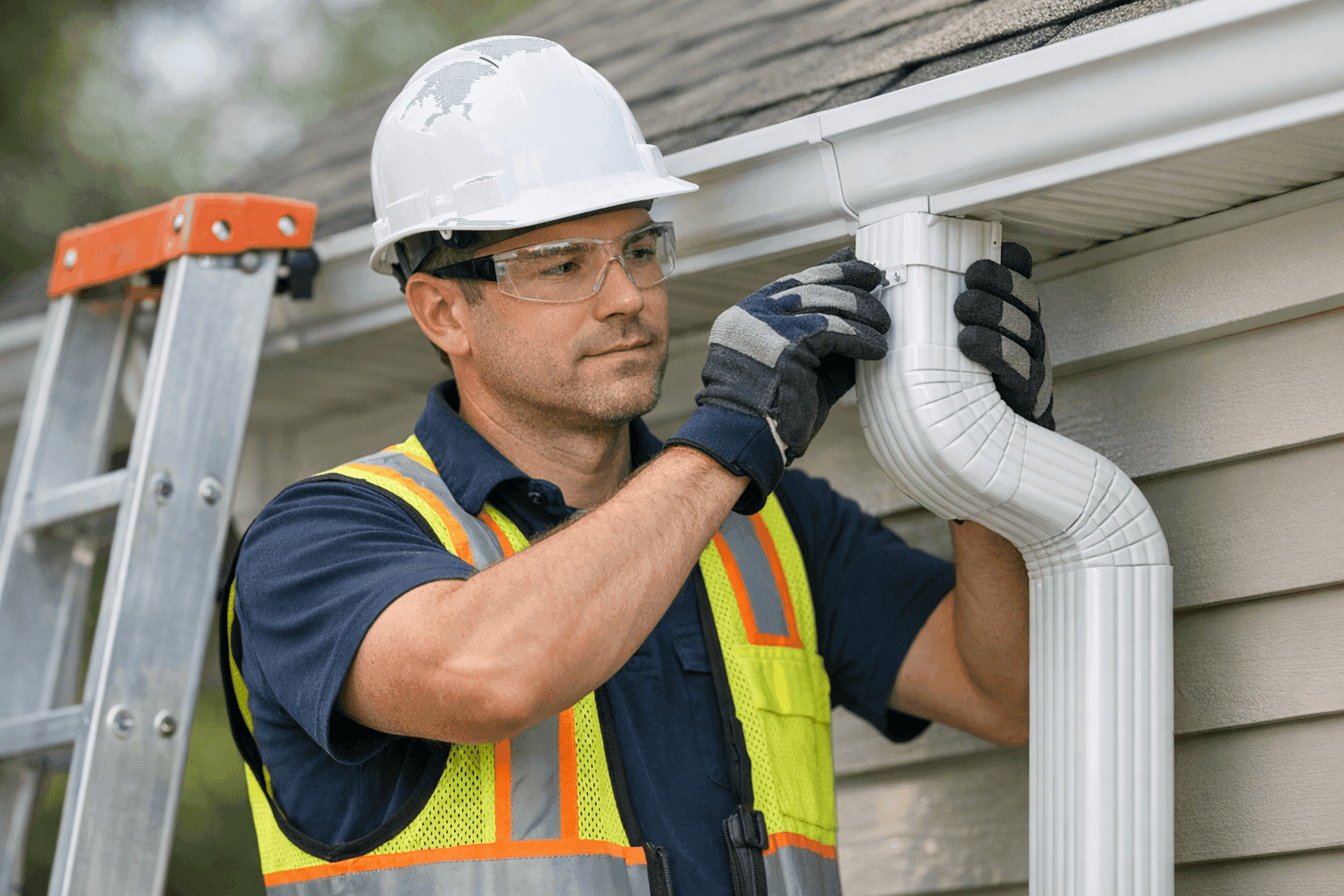
Installing downspouts might look simple, but every step counts. Here’s a professional’s approach:
- Measure and mark where downspouts will connect to the gutter system.
- Cut gutter outlets with precision to prevent jagged edges or leaks.
- Attach elbows to guide flow from the gutter into the downspout.
- Connect downspout sections with secure, overlapping joints.
- Anchor the downspout to the wall using brackets spaced every 6–8 feet.
- Add extensions or splash blocks at ground level to direct water away.
- Test with water to ensure smooth flow and spot any leaks.
Each step is double-checked for code compliance and long-term performance.
Safety First: Quick Checklist Before Starting 🛠️
Before any installation begins, safety comes first:
- Use sturdy ladders and proper footwear.
- Never work alone when handling tall ladders or heavy materials.
- Wear gloves and eye protection—sharp metal edges are no joke.
- Be mindful of power lines and underground utilities when planning downspout routes.
Professional crews follow OSHA guidelines and local safety rules to keep everyone safe.
Signs of Poor Downspout Installation
Sometimes, the warning signs are right in front of you—if you know where to look:
- Overflowing gutters, even during moderate rain
- Water stains or mildew on siding near downspouts
- Erosion or puddles around your home’s foundation
- Sagging or detached downspouts
- Paint peeling or wood rot near gutter connections
Any of these issues can signal that it’s time to inspect or upgrade your drainage system.
The Ripple Effect: What Bad Drainage Does to Your Property
Ignoring a faulty downspout is like letting a leaky faucet drip—minor at first, but expensive over time.
Consequences include:
- Foundation cracks or basement leaks
- Washed-out landscaping and muddy gardens
- Ice dams in winter, which can damage shingles and gutters
- Increased risk of mold or wood rot in walls and crawlspaces
Think of proper drainage as an invisible shield for your home or business.
When Downspout Issues Turn Into Emergencies
Sometimes, water doesn’t wait for a convenient time to cause trouble. Flash floods, burst gutters, or blocked downspouts can transform a routine day into a race against water damage.
When you see water pouring over gutters or pooling inside your property, it’s time to act fast. Local support, such as our Wilmington emergency response, can help you prevent lasting damage—day or night.
DIY or Call in the Pros?
A handy homeowner might be able to handle minor repairs, but full downspout installation is a different animal.
Here’s when you should call a pro:
- Multi-story buildings or hard-to-reach areas
- Complex rooflines or large commercial properties
- Signs of structural damage near gutters or eaves
- Need for code compliance or warranty-eligible work
Professionals bring the right tools, training, and experience to get the job done safely and correctly.
How Installation Impacts Your Whole Drainage System
Downspouts don’t work alone. They’re part of an ecosystem that includes gutters, flashing, sealants, and even the slope of your soil.
Pairing new downspouts with a gutter installation upgrade can prevent future headaches and ensure your property is protected from every angle.
What to Expect: Timeline and Disruption
Most downspout installations finish in a day, although large buildings or custom materials may take longer. Pros minimize disruption by planning ahead—removing old hardware, prepping surfaces, and cleaning up thoroughly after the work is done.
You might hear the sounds of drilling or sawing, but there’s little mess and no need to vacate your property during the process.
Common Pitfalls and How to Avoid Them
Even small mistakes can lead to big problems. Watch out for:
- Downspouts that are too short, dumping water too close to the foundation
- Missing or poorly fitted elbows, causing leaks at connections
- Blocked or undersized gutters that overwhelm downspouts
- Fasteners that rust or loosen over time
A professional eye spots these issues before they become costly repairs.
Preventative Maintenance: Keep Things Flowing
Once your downspouts are installed, regular upkeep is key.
- Clean gutters and downspouts twice a year—spring and fall are best.
- Check for loose brackets or split seams after heavy storms.
- Remove debris like leaves, twigs, and nests.
- Watch for rust, peeling paint, or signs of animal activity.
Staying ahead of problems keeps your drainage system reliable year after year.
Eco-Friendly and Code-Compliant Solutions
Modern downspout solutions can help you conserve water and protect the environment:
- Rain barrels or cisterns collect runoff for garden use.
- Permeable splash blocks allow water to soak into the soil instead of running off.
- Proper slope and placement prevent erosion and protect waterways from pollution.
Local building codes, such as those referenced in the International Building Code (IBC), set minimum standards for safe installation. Professionals ensure every job meets or exceeds these guidelines.
Seasonal Considerations: Weather and Local Needs 🌦️
Climate shapes your drainage needs. In snowy areas, downspouts need to resist ice buildup. In regions with heavy rain, capacity and flow rate are critical.
If you’re in an area that experiences all four seasons, schedule gutter and downspout inspections before the rainy season and after winter’s thaw. For those in Wilmington, our local support team can help you prepare for whatever the weather brings.
Frequently Asked Questions
How often should downspouts be cleaned?
Twice a year is typical—more if you have lots of trees nearby.
Can I add more downspouts to an existing system?
Yes. Adding extra downspouts often solves overflow and erosion issues.
What’s the best way to extend a downspout away from my foundation?
Flexible extensions or buried drain pipes work well—just make sure water travels at least 4–6 feet from the base.
Are downspouts covered by building codes?
Absolutely. Most areas require specific materials, sizes, and placement. Always check with your contractor or local building authority.
Can downspouts be matched to my home’s style?
Modern materials come in many colors and finishes—aluminum and copper are especially versatile.
When to Schedule Your Downspout Installation
If you’ve noticed any warning signs, or you’re planning a new roof or gutter project, don’t wait. Addressing drainage issues early saves money and stress down the line.
Explore our downspout installation process for more insight into what’s involved and how we can help protect your property.
Final Thoughts: Protect What Matters Most
Homes and businesses deserve protection from the ground up. Proper downspout installation isn’t just a finishing touch—it’s the backbone of a healthy roofing system. With professional planning, quality materials, and regular care, you’ll keep water in its place and problems off your mind.
Call Robert Foley Roofing now — or reach us anytime at 844-684-1881 .