Flat Roofs vs. Pitched Roofs: Pros, Cons, and Best Uses
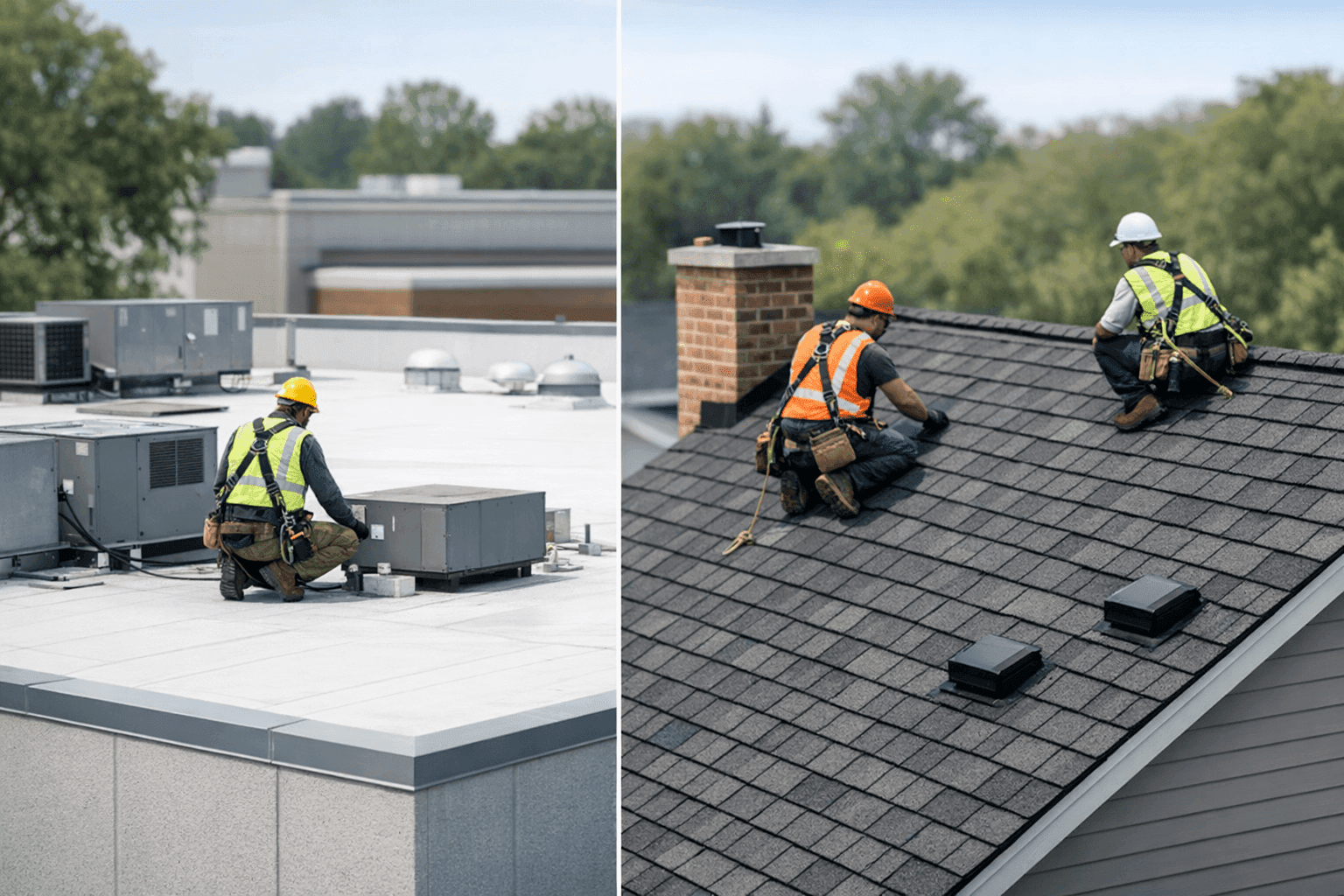
When it comes to roofing, the choice between a flat roof and a pitched roof isn’t just about looks. It’s about how your building stands up to the elements, how easy it is to maintain, and how much you’ll spend over the years. Whether you’re a homeowner, property manager, or planning a new build, understanding these roof types can save you time, money, and headaches down the road.
Let’s break down the real-world pros and cons of flat and pitched roofs, so you can make the best decision for your property—no guesswork required.
What is a Flat Roof? What is a Pitched Roof? 🏠
A flat roof is, as the name suggests, nearly level. It isn’t perfectly flat—there’s a slight slope to help water drain—but compared to a pitched roof, it’s like a tabletop. You’ll spot flat roofs on commercial buildings, modern homes, and even some garages and additions.
A pitched roof, on the other hand, has a noticeable slope. Think of the classic triangle shape you drew as a kid. Pitched roofs are common on most houses and many small businesses, designed to shed water and snow quickly.
Both types have their place. The trick is knowing which one fits your building’s needs.
Pros and Cons of Each Design
Flat Roofs
Pros:
- Cost-Effective Installation: Generally, flat roofs use less material and are quicker to install, especially on large buildings.
- Easy Access: Maintenance, inspections, or adding equipment (like HVAC units or solar panels) is simpler and safer.
- Modern Aesthetics: Clean lines and usable space—think rooftop decks or gardens.
Cons:
- Drainage Challenges: Water doesn’t run off as easily. Pooled water can lead to leaks if not managed.
- Shorter Lifespan: Materials like modified bitumen or EPDM can wear out faster than shingles or metal.
- Limited Material Choices: Not all roofing materials are suitable for flat surfaces.
Pitched Roofs
Pros:
- Superior Drainage: Rain and snow slide right off, reducing the risk of leaks.
- Longer Lifespan: Materials like asphalt shingles, tile, or metal can last decades.
- Versatility: Works with a wide range of architectural styles and materials.
Cons:
- Higher Installation Cost: More materials, more labor, more time—especially on complex rooflines.
- Harder to Access: Repairs and inspections require more safety precautions.
- Less Usable Space: You can’t easily walk or build on a steep slope.
Best Applications for Flat and Pitched Roofs
Where Flat Roofs Shine
Flat roofs are the go-to for many commercial buildings. They’re ideal for warehouses, office complexes, and retail spaces where large, open spans are needed. Flat roofs also allow for creative uses—think rooftop patios, gardens, or solar arrays.
Residentially, you’ll find flat roofs on modern or mid-century homes, home additions, and garages. If you’re considering flat roof services, weigh your climate and drainage needs carefully.
Where Pitched Roofs Excel
Pitched roofs are standard for most homes, especially in areas with heavy rain or snow. Their shape naturally channels water away, protecting the structure below. They’re also a strong choice for historic buildings, cabins, and any property where classic curb appeal matters.
Some commercial spaces—like churches, schools, or boutique shops—use pitched roofs for their architectural character and durability.
Maintenance and Longevity Considerations 🛠️
Flat Roofs
- Routine Inspections: Check for ponding water, cracks, or blisters—especially after storms.
- Keep Drains Clear: Gutters and downspouts must be free of debris to prevent water buildup.
- Sealant and Coating Upkeep: Flat roofs need periodic resealing to maintain a watertight barrier.
A well-maintained flat roof can last 15–25 years, depending on materials and climate.
Pitched Roofs
- Shingle Checks: Look for missing, curling, or damaged shingles after high winds or hail.
- Gutter Cleaning: Clogged gutters can back up water, even on a steep slope.
- Flashing and Chimney Care: Watch for rust or gaps where water could sneak in.
Pitched roofs often last 20–50 years, depending on the material—sometimes even longer with tile or metal.
Structural and Safety Factors
Flat roofs need a strong, well-supported decking system to handle any standing water or heavy equipment. Building codes (like those from the International Building Code) specify minimum slopes and drainage requirements for safety.
Pitched roofs distribute weight differently. Their angled design sheds water and snow efficiently, reducing the risk of leaks but requiring sturdy framing to support the load—especially in snowy climates.
Costs & Time Factors
Flat roofs generally cost less upfront but may need more frequent repairs or replacement. Pitched roofs cost more to build, but their longer lifespan can mean lower costs over time.
Installation for flat roofs is typically faster, especially on large buildings. Pitched roofs, with their angles and valleys, take more time and skill.
When It’s an Emergency 🚨
Leaks can happen on any roof. Flat roofs are more prone to pooling, which can quickly turn a small issue into a big problem. Pitched roofs might lose shingles or suffer wind damage.
If you notice water stains, sagging ceilings, or drips—especially after a storm—don’t wait. Quick action prevents further damage. Emergency services are available in many locations, and if you’re searching for roofing in Pearl City, timely local support can make all the difference.
Seasonal Considerations
- Winter: Snow and ice can pile up on flat roofs, stressing the structure. Pitched roofs usually shed snow, but ice dams can still form along the eaves.
- Spring/Fall: Heavy rains test both roof types. Check for leaks, clear gutters, and inspect flashing.
- Summer: UV rays can degrade roofing materials. Flat roofs may get hotter, increasing cooling costs unless well-insulated.
DIY vs. Professional Roofing
Some maintenance—like clearing gutters or checking for obvious damage—can be handled by property owners. But repairs, major inspections, and new installations are best left to professionals. Roofing work involves heights, heavy materials, and precise techniques. Mistakes can be costly and dangerous.
Common Mistakes to Avoid
- Ignoring Drainage: Both roof types need clear pathways for water. Never underestimate the power of a clogged gutter.
- Skipping Inspections: Small problems grow fast. Schedule annual checks, especially after severe weather.
- Improper Repairs: Using the wrong materials or techniques can void warranties and lead to bigger issues.
Choosing Materials: What Matters Most
For flat roofs, materials like TPO, EPDM, or built-up roofing are common. Each has its strengths—TPO is energy-efficient, EPDM is flexible, and built-up roofs are rugged.
Pitched roofs offer more options: asphalt shingles for budget-friendly installs, metal for durability, clay or concrete tiles for style and longevity. Always match the material to your climate and building needs.
Signs of Trouble
- Flat Roofs: Ponding water, bubbling or blistering, soft spots underfoot.
- Pitched Roofs: Missing or curling shingles, granules in the gutters, daylight visible in the attic.
Catch issues early to avoid costly repairs.
Timeline & Disruption
Flat roofs can often be installed or repaired with less disruption to building occupants—especially important in commercial settings. Pitched roofs may require more time and coordination, particularly for complex designs or occupied homes.
Prevention & Maintenance Tips 🧹
- Schedule professional inspections at least once a year.
- Keep all drains, gutters, and downspouts clear—think of them as your roof’s escape routes.
- Trim back overhanging trees to prevent debris buildup and physical damage.
- Use only materials and methods approved by the manufacturer and local building codes.
When to Call an Expert
If you’re facing persistent leaks, sagging, or notice mold and water stains inside, it’s time to bring in a professional. Whether your property has a flat or pitched roof, prompt attention keeps small issues from becoming major headaches.
For those considering upgrades, repairs, or new installations, reaching out to a reputable roofing company ensures the job is done safely and to code. Local knowledge matters, especially with unique weather or building requirements.
Real-World Scenarios
- A downtown business with a flat roof adds a rooftop HVAC unit—easy installation, but regular inspections are now vital.
- A family home with a pitched roof weathers a major storm. Missing shingles are replaced quickly, preventing leaks.
- An apartment complex upgrades to energy-efficient flat roofing, lowering summer cooling costs and supporting solar panels.
Each scenario highlights why understanding your roof type—and its needs—pays off in the long run.
Final Thoughts: Making the Right Choice
The best roof for your property depends on your building’s design, local climate, budget, and how you plan to use the space. Flat and pitched roofs each bring unique strengths to the table. The right choice is the one that fits your needs, now and for years to come.
Call Robert Foley Roofing now — or reach us anytime at 844-684-1881 .