Roof Leak Detection: Tools and Techniques for Accurate Diagnosis
A sudden drip. A spreading stain. Water in your home or business never arrives with a warning. Roof leaks can sneak up fast, causing stress and damage when you least expect it.
At Robert Foley Roofing, we understand how a leaking roof can disrupt your day—and threaten your structure’s safety. Whether you’re a homeowner or a property manager, knowing how to spot leaks early and what to do next can save hours of headaches (and big repair bills) down the road.
Signs and Symptoms of Roof Leaks 🕵️
Sometimes, leaks are obvious—a telltale puddle after a hard rain. But more often, the signs whisper instead of shout. Watch for these clues:
- Ceiling stains: Brown or yellow patches that grow after storms.
- Musty odors: Damp smells in attic spaces or upper rooms.
- Peeling paint or wallpaper: Especially near the ceiling line.
- Drips or puddles: Water appearing indoors, even if it dries quickly.
- Bubbling drywall: Paint or plaster that’s warped or soft to the touch.
- Visible mold: Black or green spots, especially in corners.
- Shingle debris: Bits of roofing material in gutters or on the ground.
Sometimes the source is far from the spot you see inside. Water can travel along beams or down walls before making itself known.
DIY Leak Detection Steps
Feeling brave? If you’re safe and comfortable on a ladder, you can try these simple checks before calling in help:
- Visual Inspection: Walk around your property. Look for missing, curled, or cracked shingles. Check for loose flashing around chimneys, skylights, or vents.
- Attic Peek: With a flashlight, explore the attic during or right after a rain. Look for dark or shiny spots, damp insulation, or active drips.
- Water Test: Enlist a helper. While one person stays inside watching for leaks, the other uses a garden hose to wet sections of the roof—starting low and working up. Move slowly to pinpoint the trouble spot.
- Gutter Check: Clear leaves and debris from gutters and downspouts. Blocked drainage often causes leaks along the roof edge.
- Sealant Scan: Inspect where walls meet the roof. Old, cracked caulk or sealant is a common culprit.
Safety tip: Never climb on steep, wet, or icy roofs. If you feel unsure, stay on the ground and call a professional.
Professional Tools and Techniques
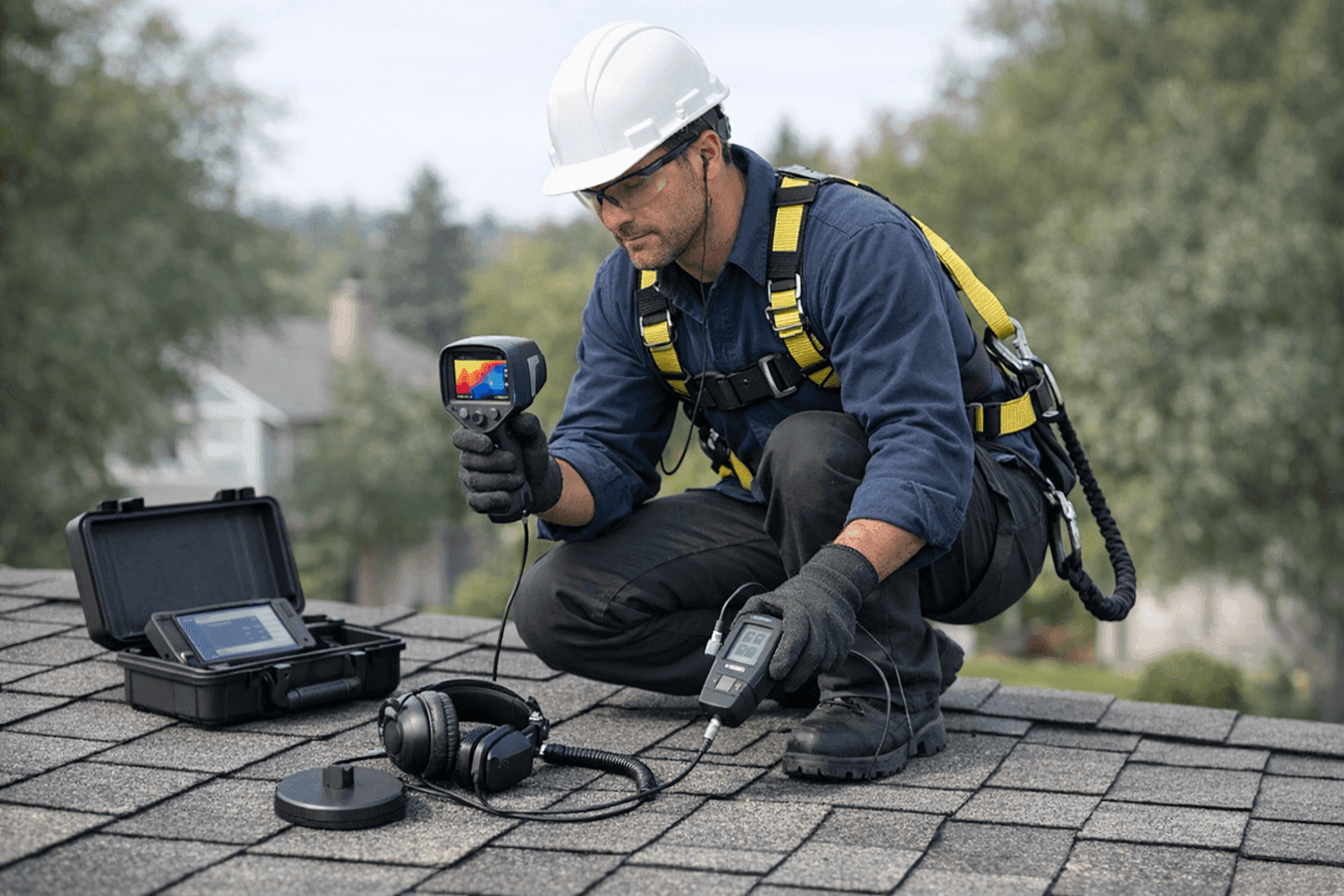
Diagnosing a hidden leak takes more than a sharp eye. At Robert Foley Roofing, we use advanced tools to go beyond what the naked eye can see:
- Infrared cameras: These thermal imaging tools spot temperature changes, revealing hidden moisture under shingles or inside walls.
- Moisture meters: Handheld devices detect water content in wood, drywall, or insulation—pinpointing leaks that haven’t shown up yet.
- Tracer dyes: Nontoxic dyes flow with water, making it easier to track the leak’s exact path from roof to interior.
- Drone inspections: For large commercial roofs or tricky spots, drones provide a bird’s-eye view—without the risk of walking on fragile surfaces.
- Smoke pencils: Used around vents or flashing, these reveal air movement that might indicate gaps or failed seals.
Our team combines these technologies with years of hands-on experience. We know how to read a roof’s story—where the trouble started, and how to stop it for good.
What Causes Roof Leaks?
Roof leaks don’t have a single cause. Here’s what we see most:
- Aging materials: Shingles, tiles, and flashing break down over time.
- Storm damage: High winds, hail, and flying debris can crack or dislodge roofing.
- Poor installation: Incorrectly placed flashing or shingles may leave gaps.
- Clogged gutters: Overflowing water can back up under the roof edge.
- Decking issues: Sagging or rotted decking lets water seep through.
- Roof penetrations: Vents, skylights, and chimneys are frequent weak spots.
Routine maintenance and regular roof inspections are your best defense against surprise leaks.
Common Mistakes When Searching for Leaks
Even handy property owners can run into trouble with leak diagnosis. Here are a few traps to avoid:
- Fixing the symptom, not the cause: Mopping up water without addressing the source only delays bigger problems.
- Using the wrong sealant: Not all caulks or patches work on roofing materials.
- Ignoring small stains: Minor signs can signal a major leak in the making.
- Skipping safety gear: Roof work is dangerous. Don’t risk a fall for a quick fix.
- Assuming leaks only happen in storms: Slow drips can be caused by condensation, HVAC issues, or animal intrusion.
When to Seek Expert Help
If you spot a leak and aren’t sure where it starts—or if your DIY checks leave you scratching your head—it’s time to bring in a pro. Especially if:
- The leak worsens or recurs after repairs
- Water damage is spreading quickly
- Mold or mildew appears
- The roof is steep, high, or hard to access
A qualified team can spot hidden issues, recommend the right fix, and restore your peace of mind. If you’re in Minnetonka, our roofing team is nearby and ready to help with prompt, respectful service.
How Professionals Track Down Hidden Leaks
The real challenge? Not all leaks show up where you expect. Water is stubborn. It snakes through insulation, around beams, and sometimes even flows uphill along capillary channels.
Our process involves:
- Careful questioning: We ask about the history, weather events, and timing of leaks.
- Layered inspection: Starting from the inside, then out to the attic, roof, and surrounding areas.
- Targeted testing: Using tools like thermal cameras and tracer dyes to follow water’s path.
- Documentation: Photographs and notes to track progress and inform repairs.
This detective work ensures repairs are targeted and lasting—fixing not just the symptom, but the source.
The Role of Roof Flashing and Sealants
Flashing is the unsung hero of roofing. These thin strips of metal or composite seal edges and joints—around chimneys, skylights, and valleys—keeping water out.
Common flashing problems include:
- Rust or corrosion: Metal flashing can wear out, especially in harsh weather.
- Loose or missing sections: High winds or poor installation can dislodge flashing.
- Cracked sealant: Sun and temperature swings age sealants, letting water sneak in.
Prompt roof flashing repair protects your structure from long-term water damage.
Structural and Decking Concerns
Sometimes, a leak reveals a deeper issue: rotted decking or compromised framing. If you notice sagging ceilings, soft spots in the attic, or uneven rooflines, structural repairs may be needed.
Our team can assess and address:
- Decking replacement
- Framing reinforcement
- Rot and mold remediation
Catching these issues early prevents expensive rebuilds down the line.
Emergency Leaks: What to Do First
Storms don’t wait for business hours. If water is pouring in, take these steps:
- Protect valuables: Move furniture, electronics, and important items away from the leak.
- Contain the water: Use buckets, towels, or tarps to limit spread.
- Relieve ceiling pressure: If a ceiling bulge forms, carefully puncture it with a screwdriver to drain water—protecting yourself and the floor below.
- Call for emergency roofing services: Quick action can prevent further damage or even collapse.
Our 24/7 response team is equipped for urgent calls, from leak repair to temporary tarping and safety checks.
Seasonal Considerations for Roof Leaks
Each season brings its own risks:
- Spring: Heavy rains reveal winter damage. Check for loose shingles and clogged gutters.
- Summer: UV rays can crack sealants and dry out roofing materials.
- Fall: Falling leaves clog gutters, causing water to back up under the roof.
- Winter: Ice dams trap melting snow, forcing water under shingles and into attics.
Regular inspections at key times of year can catch small problems before they become big headaches.
Prevention: Maintenance Is Key
Think of roof maintenance like brushing your teeth. A little effort now saves a lot of pain later. Schedule routine checks, clear gutters each season, and replace worn or damaged materials promptly.
- Inspect after storms: Even minor hail or wind can open up leaks.
- Keep trees trimmed: Overhanging branches damage shingles and clog gutters.
- Update sealants: Replace caulking around vents and flashing every few years.
- Monitor attic humidity: Proper ventilation prevents condensation and mold.
For eco-conscious owners, we offer green roofing options and sustainable materials—ask us about the latest upgrades.
How Long Does Leak Repair Take?
The timeline varies. A small leak with clear access may be resolved in a few hours. Complex or hidden leaks, needing decking or flashing repairs, could take a day or more.
We always aim to minimize disruption, working cleanly and efficiently. Our crews respect your property and your schedule.
What About Commercial Roofs?
Commercial roofing poses unique challenges—large flat surfaces, complex drainage, and multiple penetrations. Leaks can:
- Interrupt business
- Damage inventory or equipment
- Lead to safety violations
We use drone inspections, core sampling, and membrane testing to diagnose and repair leaks on all types of commercial roofing.
Frequently Asked Questions
Q: Can I just patch a leak myself?
Small, accessible leaks sometimes allow for a DIY patch. But without proper diagnosis, water may return—often in a new spot.
Q: Is a leak always under the stain?
Not always. Water can travel along framing, so the entry point may be several feet away.
Q: Are leaks covered by insurance?
It depends on your policy and the cause. Sudden storm damage is often covered; gradual wear and tear may not be.
Q: Will a new roof stop all leaks?
A new roof fixes most problems, but flashing, skylights, and chimneys must also be properly sealed.
Ready for Leak-Free Living?
Don’t let a leaky roof steal your peace of mind. From fast leak repairs to thorough inspections, Robert Foley Roofing brings the right tools, skills, and care to every job. If you’re unsure, just give us a call—our team is here to help, from emergency fixes to long-term prevention.
Call Robert Foley Roofing now — or reach us anytime at 844-684-1881 .