Roof Lifespan: How Long Do Different Roofing Materials Last?
Roofs are like the shoes of your building. You don’t always notice them—until they start to wear out, or worse, spring a leak at the worst time. Whether you own a family home or manage a commercial property, understanding your roof’s lifespan is more than curiosity. It’s about protecting what’s under it, and planning ahead before the next big storm.
At Robert Foley Roofing, we’ve replaced, inspected, and repaired just about every type of roof out there. If you’re wondering how long your roof will last—or how to help it last even longer—this guide is for you.
The Big Question: How Long Should a Roof Last?
Not all roofs age the same way. Some go gray early, others stick around for decades. The answer depends on what it’s made from, the climate it braves, and how you care for it. Let’s walk through the main materials you’ll find on homes and businesses today.
Asphalt Shingles: The Familiar Favorite
Asphalt shingles are everywhere. Chances are, you see them on your neighbor’s house, your own, or that office down the street. Why? They’re affordable, easy to install, and come in a rainbow of colors.
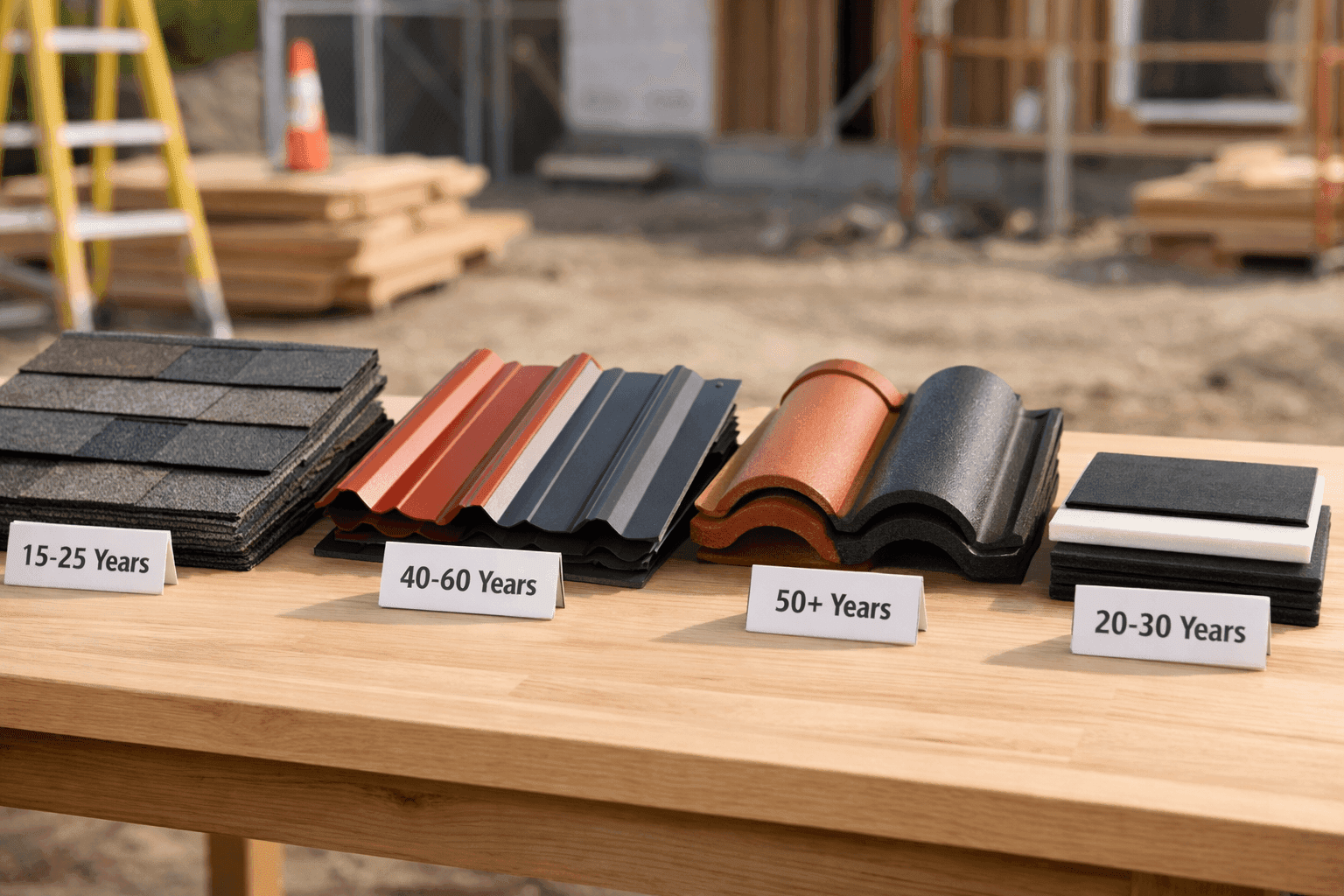
- Typical Lifespan: 15–30 years (according to the National Roofing Contractors Association)
- What Impacts It: UV rays, sudden freezes, and how well your attic breathes
- Maintenance Tips: Keep gutters clear, replace cracked shingles, fix flashing promptly
Think of asphalt shingles as a sturdy pair of sneakers—dependable, but they’ll wear out faster if you run them through puddles or skip cleaning.
Metal Roofing: Tough as Nails, Made to Last
Metal roofs are the marathon runners of the roofing world. They shrug off hail, laugh at heavy rain, and reflect the sun’s heat like a mirror. You’ll see them on sleek modern homes, barns, and commercial buildings.
- Typical Lifespan: 40–70 years (per Metal Roofing Alliance)
- What Impacts It: Salt in the air (coastal areas), fastener corrosion, paint finish quality
- Maintenance Tips: Check for rust, keep debris off, watch for loose screws
Picture metal roofing as a steel-clad boot—almost indestructible, but it still needs the occasional polish.
Tile Roofing: Classic Beauty with Staying Power
Clay and concrete tiles bring a sense of timelessness. They’re heavy, solid, and give roofs that Mediterranean flair. Tile is popular for both homes and high-end commercial properties.
- Typical Lifespan: 50–100 years (manufacturer data, such as Boral and Eagle Roofing)
- What Impacts It: Freeze/thaw cycles, structural support, broken tiles from falling branches
- Maintenance Tips: Replace broken tiles, check underlayment, inspect for moss or lichen
Think of tile roofs as the leather dress shoes of roofing—elegant, durable, but they’ll crack if dropped.
Flat Roofs: The Workhorses of Commercial Spaces
Flat roofs are common on businesses and modern homes. Their design makes them practical for solar panels or rooftop decks, but they need a little extra care.
- Typical Lifespan: 10–30 years, depending on membrane type (EPDM, TPO, PVC)
- What Impacts It: Ponding water, UV exposure, membrane punctures from foot traffic
- Maintenance Tips: Regular inspections, clear drains, patch holes promptly
Flat roofs are like work boots—ready for anything, but only if you clean them off and check the soles now and then.
What Wears a Roof Out? Key Factors That Matter
Even the best roof can’t outlast everything. Here’s what really cuts years off—or adds years on:
- Climate: Blazing sun, howling wind, snow, and hail all speed up aging. Roofs in mild climates often last longer.
- Maintenance: Regular cleaning and inspections keep small problems from turning into big ones.
- Installation Quality: A perfectly installed roof just lasts longer. Sloppy work costs you years.
- Ventilation & Insulation: Poor airflow cooks or freezes your roof from the inside out.
- Storms & Trees: Fallen limbs and storm debris can break or puncture roofing materials.
Signs Your Roof Is Aging (and What to Watch For) 🕵️
Your roof won’t send you a calendar invite when it’s wearing out. Instead, look for:
- Shingles curling, cracking, or missing
- Rust spots or loose panels on metal roofs
- Broken or slipped tiles
- Ponding water on flat roofs
- Granules collecting in gutters
- Daylight peeking into your attic
If you notice any of these, it’s time for a closer look—or a professional inspection.
How to Add Years to Your Roof’s Life
Small habits make a big difference. Here’s how to help your roof go the distance:
- Clean Gutters: Water backup can rot edges and damage fascia.
- Trim Trees: Overhanging branches scratch and break materials.
- Inspect Flashing: Leaky joints are a common culprit for interior leaks.
- Check After Storms: Wind and hail can cause hidden damage.
- Schedule Preventative Maintenance: An annual checkup catches issues early. See our preventative maintenance tips for what to expect.
DIY or Call for Help? Knowing Your Limits
Some upkeep is simple—clearing leaves, spotting missing shingles. But climbing ladders, handling repairs on steep or slippery roofs, or dealing with electrical lines is risky. If in doubt, call a professional.
When to Replace, Not Repair
Every roof reaches a point where patching won’t cut it. If repairs are stacking up, leaks keep returning, or you’re seeing widespread wear, it may be time for a roof replacement.
Weather and Seasons: Timing Matters 🌦️
Summer sun can bake shingles. Winter freezes can crack tiles. Spring storms test every seam. In certain regions, like Casa Grande, seasonal weather patterns make regular maintenance even more vital.
Common Mistakes That Shorten Roof Life
- Ignoring small leaks until they become big ones
- Power-washing shingles (which strips away protective granules)
- Using incompatible sealants or patches
- Blocking attic vents, which traps heat and moisture
Emergency Roofing: What to Do When Trouble Strikes
If you spot a sudden leak, missing tiles after a storm, or suspect structural damage, act quickly. Mop up any water, move valuables, and call for help. Roofing emergencies don’t wait.
Commercial Roof Lifespans: Special Considerations
For business owners, roof downtime means lost revenue. Flat roofs especially need careful care—routine inspections, drain clearing, and choosing the right membrane for your building’s use. Schedule regular service to avoid surprises.
Eco-Friendly Roofing: Lifespan and Benefits
Sustainable materials like cool roofs, recycled shingles, and green roofing systems can offer long lifespans and lower your energy bills. They’re worth considering for new construction or replacement projects.
The Timeline: What to Expect During Roofing Work
- Inspections: Usually half a day or less, minimal disruption.
- Repairs: 1–2 days for most jobs, depending on complexity.
- Replacement: 2–5 days for homes, longer for large commercial buildings.
- Flat Roofs: May require extra time for curing or weather delays.
Don’t Wait for Trouble—Take Action Now
A well-cared-for roof is a silent guardian. Regular inspections and maintenance are your best insurance against costly surprises down the road. If you’re ever unsure about what your roof needs, Robert Foley Roofing is here to help.
Call Robert Foley Roofing now — or reach us anytime at 844-684-1881 .