Roofing Terms Glossary: Understand the Language of Roofing
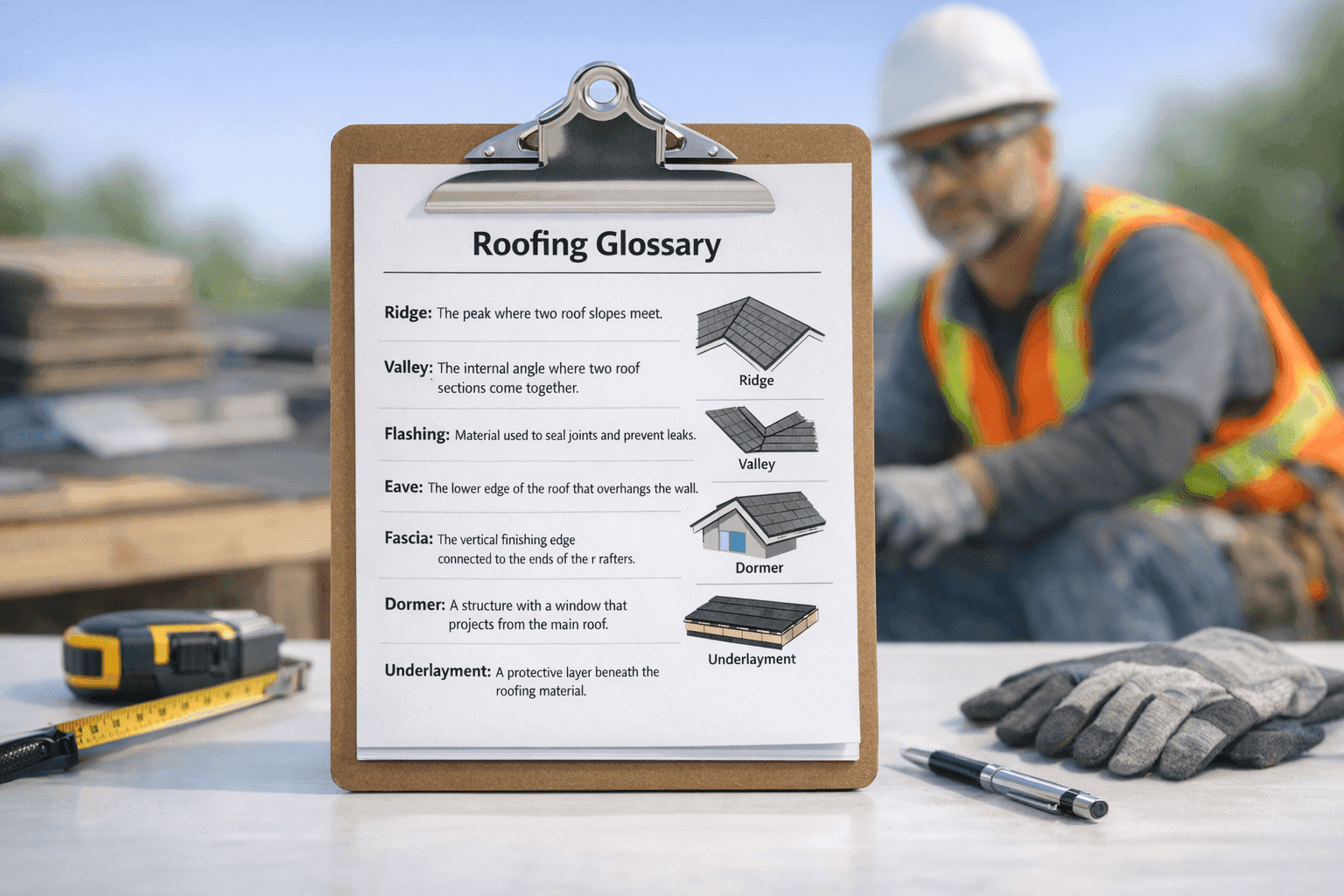
Every industry has its own language. Roofing is no different. If you’ve ever felt lost in a sea of shingles, flashing, and valleys, you’re not alone. At Robert Foley Roofing, we believe clear communication builds trust—and a better roof over your head.
Whether you’re facing storm damage, planning a new build, or just want peace of mind, knowing the right terms helps you make confident decisions. This glossary is your guide to speaking the language of roofing—so you’re never left guessing.
Common Roofing Terms and Definitions 🏠
Roofing talk can sound like another dialect. Here’s what you need to know:
- Decking: The foundation of your roof. Usually made of plywood or OSB, this is what everything else sits on.
- Shingles: Overlapping pieces (asphalt, tile, wood, or metal) that form the outer layer. They’re like the scales on a fish—shedding water away.
- Flashing: Thin metal strips installed at joints (chimneys, skylights, valleys) to keep water out.
- Underlayment: A water-resistant barrier between decking and shingles. Think of it as your roof’s raincoat.
- Valley: The “V” where two roof slopes meet. Water flows here, so it needs extra protection.
- Eaves: The edges of your roof that hang over the walls. They help direct water away from your home.
- Soffit: The underside of the eaves, often vented to let your attic breathe.
- Ridge: The top line where two roof planes meet. Usually capped for extra weather defense.
- Gutter: Channels that collect and direct rainwater away from your foundation.
- Downspout: The pipe attached to gutters, sending water safely to the ground.
- Pitch: The angle or steepness of your roof, measured as rise over run.
- Cap Sheet: The top layer on a flat or low-slope roof, sealing out the elements.
- Blistering: Bubbles that form under shingles or membranes—often a sign of trapped moisture or poor ventilation.
- Ice Dam: In colder climates, a ridge of ice at the eaves that blocks melting snow, causing leaks.
Understanding these basics helps you follow along during roof repair services or inspections, and lets you ask the right questions.
Parts of a Roof Explained
Picture your roof as a layered cake. Each slice has a job:
- Decking is the plate—everything rests on it.
- Underlayment is the icing—smooths out imperfections and keeps moisture at bay.
- Shingles or Tiles are the top layer—protecting everything underneath.
- Flashing is the foil wrap—guarding the trickiest parts from water.
- Gutters and Downspouts are the moat—directing water away from your home’s foundation.
- Ventilation (like ridge vents or soffit vents) is the window—letting air flow so your attic doesn’t turn into a sauna.
If you’re dealing with a flat roof, you might see terms like membrane (a waterproof sheet) or gravel (for extra protection). For commercial buildings, you’ll hear about TPO, EPDM, or modified bitumen—special materials for flat or low-slope roofs.
How to Use Roofing Language with Contractors
Talking to a roofer shouldn’t feel like decoding a secret message. Here’s how to get your point across:
- Use the right terms. Instead of “the edge thingy,” say “eave” or “soffit.”
- Ask for explanations. If your contractor mentions “flashing” or “underlayment,” ask to see an example.
- Be specific about problems. “There’s a leak by the chimney flashing” is more helpful than “It’s dripping somewhere.”
- Don’t be shy about pronunciation—pros care more about understanding than perfect lingo.
- Request a walk-through before and after the job. Point at parts you’re unsure about.
Clear communication leads to fewer surprises on your invoice—and a roof that lasts.
Questions to Ask During Your Project 📝
Don’t let roofing jargon leave you in the dark. Here are smart questions to ask:
- What materials are you using for decking, underlayment, and shingles?
- How will you address valleys, ridges, and flashing?
- Can you show me where the leak is coming from?
- What’s included in your inspection?
- How will you protect my gutters and landscaping during the project?
- What’s your plan for ventilation and insulation?
- Are you following local building codes and manufacturer guidelines?
- Who do I contact if I have questions during the job?
The more you know, the smoother your project runs.
Safety First: What Every Homeowner Should Know
Roofing isn’t just about shingles—it’s about safety. Steep slopes, heavy materials, and unpredictable weather make it risky work. If you’re considering a DIY fix, remember:
- Never climb on a wet or icy roof.
- Use a sturdy ladder and secure footing.
- Wear non-slip shoes and a harness if possible.
- Watch for overhead wires and loose debris.
- Always work with someone nearby.
Professional roofers follow OSHA safety standards and use proper fall protection. Sometimes, the smartest move is staying on the ground and calling a pro.
When It’s an Emergency: What to Do Next
Storms can turn your roof into a sieve overnight. If water is pouring in or you spot missing shingles after a windstorm, act fast:
- Stay safe—don’t climb up in bad weather.
- Place buckets or tarps to catch drips inside.
- Call a roofer for emergency tarping or repairs.
- Take photos for insurance before temporary fixes.
If you’re looking for roofing services in Hilo, quick local support is available to help secure your property after severe weather.
Prevention & Maintenance: Keep Problems Small
Like regular oil changes for your car, a little roof maintenance goes a long way:
- Clean gutters and downspouts twice a year.
- Trim overhanging branches.
- Check for missing or broken shingles after storms.
- Look for moss, algae, or debris buildup.
- Schedule annual inspections—most issues start small.
The National Roofing Contractors Association (NRCA) recommends routine checks, especially after storms or extreme weather.
DIY vs. Call a Pro: Know Your Limits
Some tasks—like cleaning gutters or replacing a shingle—are within reach for handy homeowners. But when it comes to structural repair, leak tracing, or working at height, it’s best to leave it to professionals.
If you notice sagging, widespread leaks, or suspect storm damage, don’t risk it. The cost of a mistake can far outweigh the price of a service call.
What Pros Do On Arrival
When a roofing crew shows up, here’s what to expect:
- A walk-through of your property.
- Visual inspection of shingles, flashing, gutters, and attic.
- Photos or notes on problem areas.
- Discussion of repair or replacement options.
- Clear explanation of next steps.
Reputable contractors will answer your questions and provide a written estimate before starting work.
Materials & Equipment: What’s Used and Why
Roofing materials vary by climate, building type, and budget. Here are some common choices:
- Asphalt Shingles: Affordable and durable for most homes.
- Metal Roofing: Long-lasting, fire-resistant, and energy efficient.
- Tile Roofing: Classic look, excellent for hot climates.
- Flat Roof Membranes: TPO, EPDM, or modified bitumen for commercial or modern homes.
- Sealants and Coatings: Extend roof life and improve water resistance.
- Eco-Friendly Options: Cool roofs, recycled materials, or green roofing systems.
Ask your contractor why they recommend certain products—each has pros and cons for different situations.
Signs of Trouble: When to Take Action 🛑
Don’t ignore these warning signs:
- Water stains on ceilings or walls.
- Curling, cracked, or missing shingles.
- Granules collecting in gutters.
- Sagging or soft spots on the roof.
- Musty attic smells or visible mold.
Catching problems early can save you from major repairs later.
Timeline & Disruption: What to Expect
Roofing projects can be noisy and messy—but most are done in a day or two for residential homes. Commercial or complex jobs may take longer.
- Expect some noise and vibration.
- Move cars and outdoor furniture away from the work zone.
- Cover valuables in the attic.
- Ask for daily cleanup and debris removal.
Your contractor should provide a clear schedule and keep you updated.
Costs & Time Factors: Budgeting for Your Roof
Prices vary based on materials, roof size, and complexity. Factors that affect cost:
- Steepness (pitch) and height.
- Number of layers to remove.
- Accessibility for equipment.
- Local code requirements.
Always get a detailed written estimate. Don’t be afraid to ask what’s included—and what’s extra.
Common Mistakes to Avoid
- Skipping annual inspections.
- Ignoring minor leaks until they become major.
- Choosing materials based only on price.
- Hiring unlicensed or uninsured contractors.
- Forgetting about attic ventilation.
A little knowledge prevents big headaches.
Preparing for Service: Tips for Homeowners
- Clear your driveway and pathways.
- Move fragile items away from walls and ceilings.
- Inform neighbors about the project timeline.
- Discuss access needs with your contractor.
- Ask about warranty and maintenance plans.
Preparedness keeps your project smooth and stress-free.
FAQ: Quick Answers to Roofing Questions
Q: How often should I replace my roof?
A: Most asphalt shingle roofs last 20–30 years. Metal, tile, or slate can last much longer with proper care.
Q: What’s the difference between repair and replacement?
A: Repairs fix isolated issues—like a leak or missing shingle. Replacement means installing a new roof system.
Q: Is ventilation really important?
A: Yes! Proper airflow prevents moisture buildup and extends roof life.
Q: Do I need to be home during the project?
A: Not always, but it helps if you’re available for questions or a final walk-through.
Building Codes & Safety: Why They Matter
Roofing isn’t just about looks—it’s about protecting your investment and safety. Local building codes (based on International Building Code and manufacturer guidelines) ensure your roof is built to last and withstand local weather. Always ask if your contractor is up to date on code requirements.
No matter your project—repair, replacement, or new construction—knowing the language of roofing puts you in control. If you’re ready to get started or have questions about your next project, Call Robert Foley Roofing now — or reach us anytime at 844-684-1881 .