Winter Roofing: How to Prevent and Repair Snow and Ice Damage
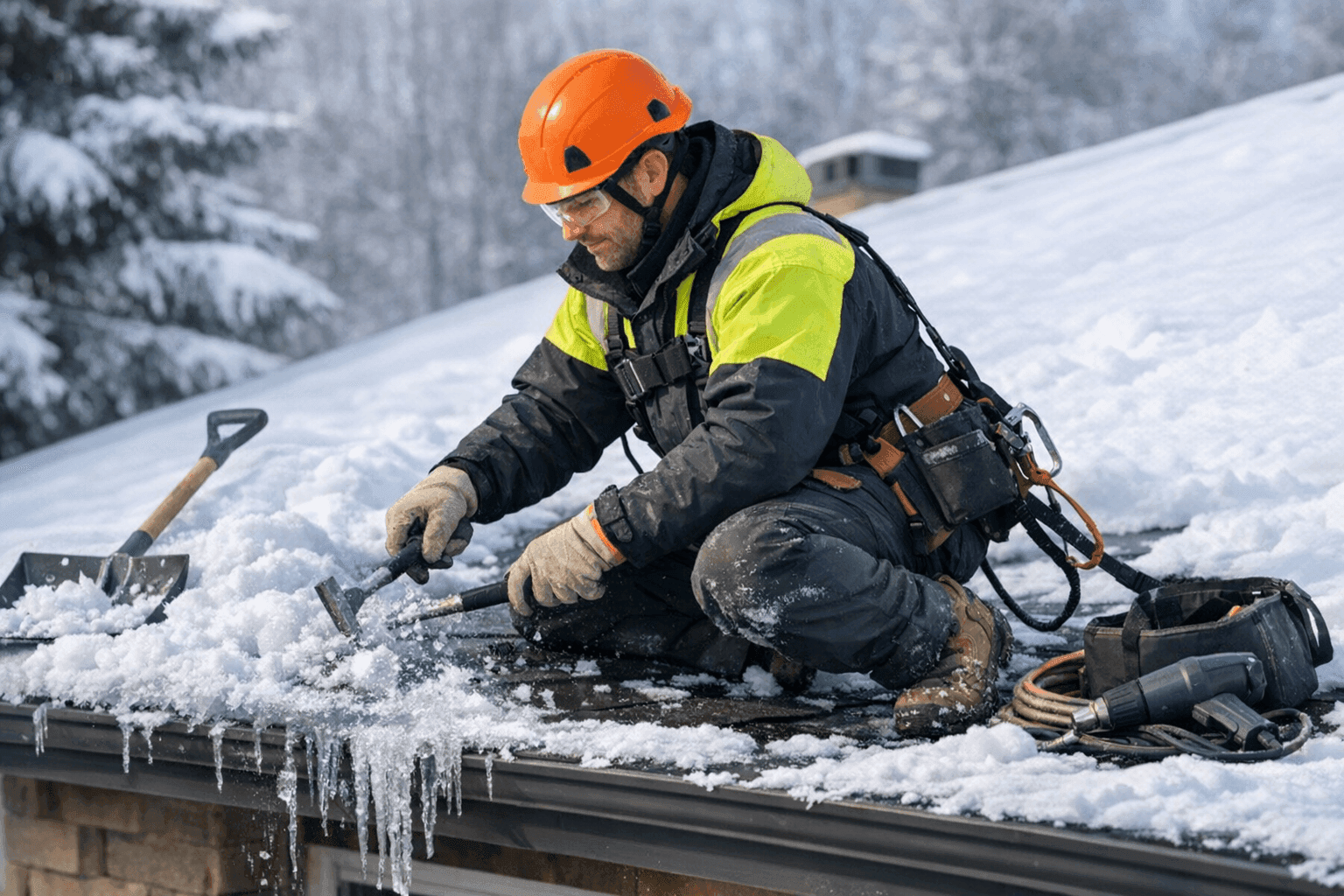
Winter can turn your roof into a battleground. Freezing temperatures, relentless snow, and biting wind leave no mercy for the unprepared. If you’ve ever watched icicles forming along your gutters or seen water stains creeping down your walls, you know the stress winter can bring.
At Robert Foley Roofing, we understand what’s at stake. Your home or business isn’t just a structure—it’s your comfort zone, your investment, and your peace of mind. With decades of hands-on experience, we’re here to help you weather the season with confidence.
How Snow and Ice Damage Roofs ❄️
Winter doesn’t just blanket your roof—it tests it. Here’s how:
- Snow Load: Heavy, wet snow piles up, adding thousands of pounds of weight. Over time, this stresses your decking and framing. If the load exceeds what your roof was built to handle (refer to IRC Chapter 8 for residential structural requirements), you risk sagging or even collapse.
- Ice Dams: When warm air escapes from your home, it melts the bottom layer of snow. That water trickles to the roof edge, freezes again, and forms a dam. Water backs up behind it, sneaking under shingles and flashing. This is a leading cause of winter leaks.
- Freeze-Thaw Cycles: Melting and refreezing turns small cracks into big problems. Water expands as it freezes, prying apart joints, flashing, and seams.
- Icicles: Pretty but perilous. They signal poor insulation or ventilation—and can pull down gutters or damage shingles.
The result? Water stains on your ceiling, mold in your attic, or worse—structural damage that’s costly to fix.
Quick Safety Checklist for Winter Roofing
Before you grab a ladder or shovel, think safety first:
- Never climb a snowy or icy roof. Falls are common and can be fatal.
- Use a roof rake with a long, telescoping handle to clear snow from the ground.
- Avoid electrical lines. Snow removal tools can conduct electricity.
- Check for sagging or strange noises in the attic. This could mean serious structural stress.
- Know your limits. If you’re unsure, call a pro.
Prevention Tips for Winter
The best defense is a well-prepared roof. Here’s how to keep winter at bay:
1. Insulation and Ventilation Matter
Think of your attic like a hat for your house. A good one keeps heat in where it belongs and cold out. According to the U.S. Department of Energy, proper insulation (R-38 or higher for cold climates) and ventilation prevent ice dams and reduce heating costs. Make sure soffit vents, ridge vents, and insulation are up to code.
- Upgrade attic insulation if you notice uneven snow melt.
- Ensure ventilation channels are clear—not blocked by insulation or debris.
- Consider a professional ventilation and insulation check.
2. Clean Gutters and Downspouts
Clogged gutters are like clogged arteries—water can’t flow, so it backs up and freezes. Clean gutters in late fall and after every storm to prevent ice dams. Ensure downspouts point away from your foundation.
3. Trim Overhanging Branches
Branches dump snow and ice onto your roof, increasing the load and risk. Keep them trimmed back at least six feet from the roofline.
4. Regular Inspections
Schedule a professional inspection in fall and spring. Pros spot missing shingles, loose flashing, and small leaks before they become big headaches.
5. Roof Raking After Storms
Remove snow after each big storm—especially along the eaves. Don’t let more than a foot of snow accumulate. Always rake from the ground.
Signs of Winter Roof Trouble
Not every issue is obvious. Watch for these warning signs:
- Ice dams forming along the eaves
- Icicles bigger than your forearm
- Water stains on ceilings or walls
- Attic frost or mold
- Shingles curling, missing, or cracked
- Sagging spots on your roof or ceiling
- Dripping water inside, especially after thawing
Catch these early, and you’ll avoid bigger headaches.
Repair Options for Common Winter Issues 🛠️
Winter damage isn’t the end of the story. Here’s how repairs usually go:
1. Ice Dam Removal
Never chip away at ice dams with sharp tools. Instead, pros use steamers or heated cables to melt ice safely. In urgent cases, a roofing specialist may open a channel through the dam to allow water to drain.
2. Shingle and Flashing Repair
Missing or damaged shingles? Flashing that’s pulled away from chimneys or vents? These can often be patched or resealed, even in cold weather. Roofing cement and cold-weather sealants work when applied by skilled hands.
Check out our roof repair service to understand what’s involved and how quick fixes can make all the difference.
3. Attic Ventilation and Insulation Upgrades
If ice dams are a recurring problem, it may be time to add insulation or improve airflow. This can be done year-round and pays off in comfort and energy savings.
4. Emergency Leak Repair
When water is dripping inside, time is of the essence. Tarps or temporary sealants can buy you time until a full repair is possible. Don’t ignore leaks—they only get worse with each freeze-thaw cycle.
5. Gutter and Downspout Repair
Broken gutters or downspouts should be realigned, resealed, or replaced as needed to restore water flow and prevent further ice buildup.
When to DIY, and When to Call a Pro
Some jobs are suited for homeowners. Clearing gutters, using a roof rake, or adding insulation batts in your attic can be safe, practical DIY tasks.
But if you notice:
- Large ice dams, sagging ceilings, or structural creaks
- Leaks inside your house
- Damage that involves more than a few shingles
...it’s time to step back. Roofing is dangerous work, especially in winter. Licensed professionals have the right equipment, materials, and insurance. They’re trained to spot hidden issues and perform repairs safely—even on snow-covered roofs.
What To Expect When the Pros Arrive
Here’s how winter roof repairs typically unfold:
- Assessment: The technician inspects your roof from the ground and the attic, looking for leaks, ice dams, structural damage, and insulation gaps.
- Temporary Protection: If needed, they’ll install tarps or sealants to stop water intrusion.
- Targeted Repairs: Shingles, flashing, gutters, or vents are repaired or replaced as needed.
- Cleanup: Debris, ice, and snow are safely removed.
- Follow-up: Recommendations for further upgrades or preventative steps.
You get clear communication and a safer, drier home or business.
Emergency Winter Roofing: What Counts as Urgent?
Not every leak is a five-alarm fire, but some winter roofing problems need immediate attention:
- Water actively dripping inside
- Bulging ceilings or walls (signs of trapped water)
- Large, growing ice dams threatening gutters or walkways
- Sagging rooflines or popping/cracking noises from above
If you’re in this spot, local help is available—see how our team serves the Burlington area with prompt, professional response.
Costs, Time, and Disruption
How much will winter roof repairs set you back? It depends:
- Minor Repairs: Patching a few shingles or sealing flashing can take a couple of hours.
- Ice Dam Removal: Usually completed in a single day, depending on size.
- Major Structural Repairs: May require several days and a larger crew.
Expect some noise and temporary inconvenience, but most repairs can be completed without disrupting daily life. Ask for a clear estimate and timeline before work begins.
Materials and Equipment Used in Winter Roofing
Special conditions call for specialized tools:
- Ice melt products (safe for roofs, not all brands are)
- Roof rakes and snow removal tools
- Cold-weather roofing adhesives and sealants
- Heated cables or temporary tarps
- Personal fall-protection gear
All are essential for safety and effectiveness.
Seasonal Considerations: Maintenance Never Stops
Winter is tough, but every season brings unique challenges. Schedule inspections in fall to prepare, and again in spring to spot any damage winter left behind. Preventative maintenance—like cleaning gutters, checking attic vents, and replacing worn shingles—saves money and stress in the long run.
For businesses and homeowners searching for “Decking near you,” remember that winter care is just as important for flat roofs, metal, tile, and shingle systems alike.
Frequently Asked Questions
How much snow is too much for my roof?
Most roofs are built to withstand 20–40 pounds per square foot, but factors like age and design matter. If snow is over a foot deep and heavy (wet), it’s time to remove it.
Will insurance cover winter roof damage?
Insurance may cover certain storm or ice-related damage—check your policy and document everything.
Can repairs be done in freezing weather?
Yes, but some materials (like certain adhesives) require specific temperatures. Professionals use products rated for winter application.
What’s the best way to prevent ice dams?
Proper attic insulation, ventilation, and keeping gutters clear are your best bets.
Final Thoughts
Winter roofing isn’t just about surviving the season—it’s about protecting your home or business, your investment, and your peace of mind. Proactive steps now spare you stress and expense later.
Call Robert Foley Roofing now — or reach us anytime at 844-684-1881 .